Some rooms never catch up
The thermostat says the house is comfortable. A bedroom or bonus room still runs hot or cold.
Free home duct-leakage inspection
Your ductwork may be leaking conditioned air into your attic, walls, crawlspace, or other spaces instead of delivering it to the rooms you’re paying to heat and cool.
Typical homes can lose 20–30% of the air moving through their duct system through leaks, holes, and poor connections. Find out what your home is losing.
No obligation · Local service · We show you the numbers
Or call (385) 204-3047
Local · Measured · No drywall demo
Trusted for one job: find out if this house is leaking.
Residential duct cleaning and internal sealing for Saratoga Springs and nearby Utah County cities. We only recommend sealing if the inspection shows it will help.
Recognize the house
The thermostat says the house is comfortable. A bedroom or bonus room still runs hot or cold.
You can feel air coming out, but it doesn’t seem like enough to hold the room.
You’re paying to condition air. If ducts leak, some of that air can escape before it reaches the rooms you live in.
Leaky ducts can make the furnace or air conditioner work longer to reach the temperature you asked for.
Utah attics get brutally hot, and unconditioned spaces get extremely cold. Air leaking there is air you already paid to condition.
A new furnace or air conditioner still pushes air through the old leaks. The inspection tells you whether the ducts are the missing piece.
20–30%
ENERGY STAR / U.S. Department of Energy estimate for a typical home.
The number that matters
That’s how much conditioned air a typical home can lose through duct leaks, holes, and poor connections. Your home isn’t typical. That’s why we measure your system instead of guessing from the age of the house or the equipment.
Diagnosis first
01
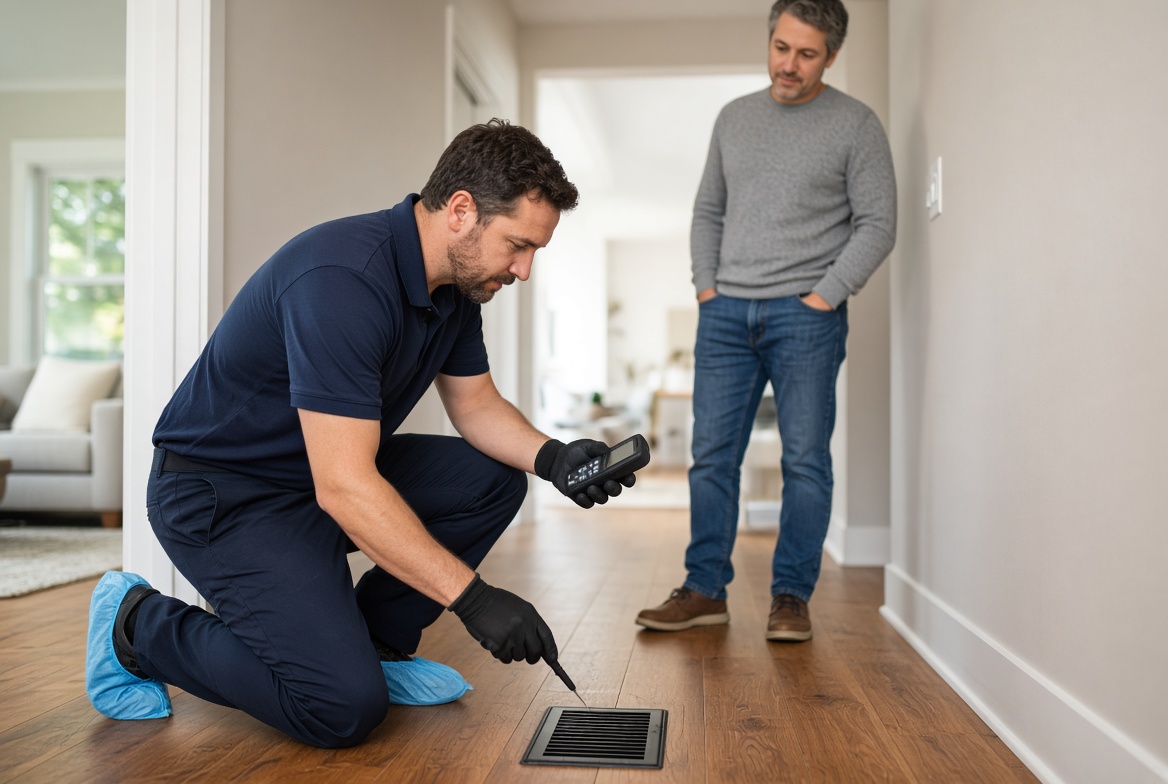
We look at the HVAC system and ductwork for leakage and problem areas.
02
We measure airflow and put a real number on how the system is performing.
03
We point out likely sources of leakage and weak delivery.
04
If sealing will help, we explain what we found. If it won’t, we say so.
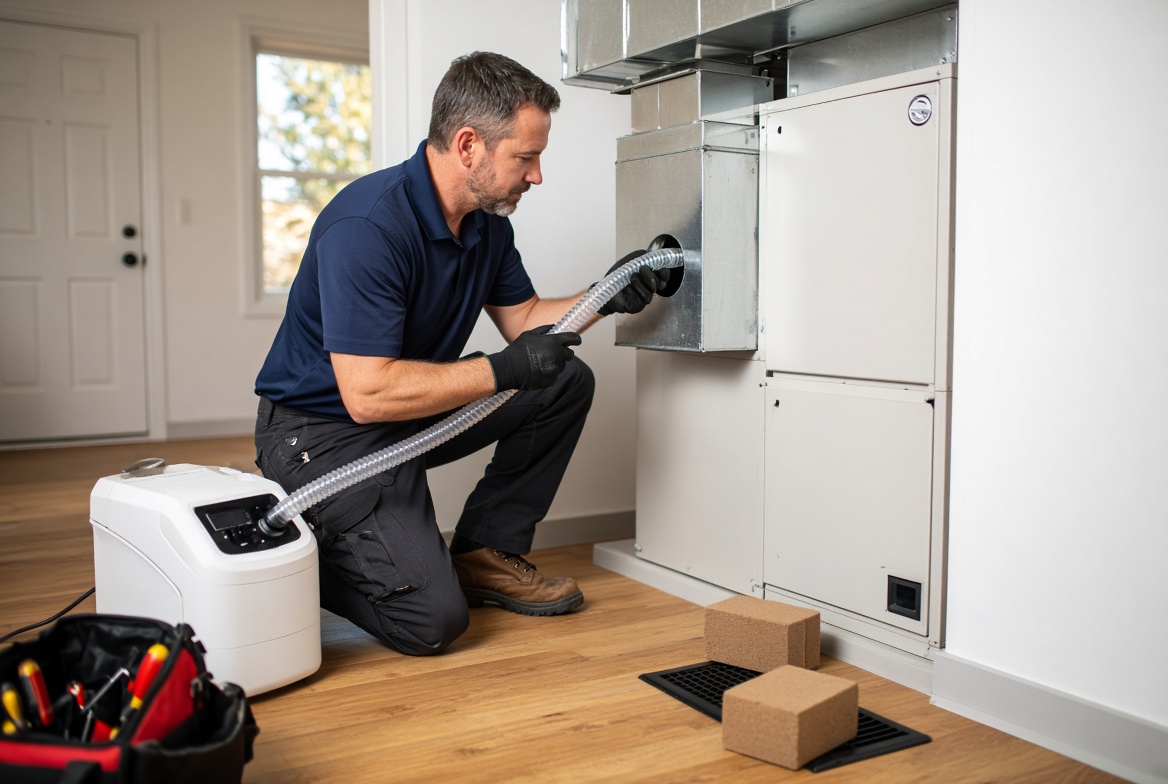
Visual proof

Only after you’re interested
We pressurize the duct system and introduce a sealant. Particles travel through the ductwork and accumulate around leaks until openings close — including joints in walls and other concealed runs that tape can’t reach.

Wasatch Front
Summer attics here routinely get past 120°F. Winter nights drop well below freezing. If ductwork runs through those spaces, you can pay to heat or cool air that never makes it into the rooms you’re trying to condition.
The difference
We’re here to find out what’s actually happening inside the system. You get the information. You decide.
Airflow and leakage measurements, not “old ducts probably leak.”
We’ll explain what we’re seeing and why it matters in this house.
A sealing visit ends with a before-and-after leakage report you can use for a Rocky Mountain Power rebate filing when a program is open.
If sealing won’t help, we say so. The inspection is free either way.
The offer
We’ll come to your home and evaluate the HVAC and duct system. If leakage or weak airflow is affecting comfort, you’ll see it. If not, you’ll hear that too.
No obligation
$0
Free home duct-leakage inspection for residential homes in our service area.
Request the inspection
Start with your name, phone, ZIP, and what’s bothering you. Address comes next, after you’ve asked us to look.
Short answers
No. Cleaning removes debris. Sealing addresses air leakage. Depending on the system, you may need one or both. The inspection tells you which one first. Sealing visits start with a professional cleaning.
Typically, no. Internal sealing is designed to reach concealed leaks without opening drywall. Registers are blocked during the seal, then put back.
Most residential systems can be tested and treated in a few hours. You can stay home.
That’s what the inspection is for. We measure instead of assuming.
We’ll tell you. The goal is to see whether there’s a problem worth addressing.
The useful question is whether this system has leakage that can be addressed. Openings up to about the size of a quarter can be sealed from the inside, and the job ends with a before-and-after report.
Stop guessing
You may be paying to heat and cool air that never reaches the rooms you’re trying to condition. Find out what’s happening inside this duct system.
Local · Professional · No obligation